
 97
97
What’s Inside
- Route Intelligence: Wizz Air, Transavia, and Allegiant launch extensive network expansions, while United Airlines outlines major winter seasonal suspensions.
- TSA Testing: Boston Logan trials an innovative off-airport "Straight to Gate" security screening program in Framingham.
- Financial Results: Ryanair posts record fiscal year 2026 profits of €2.26 billion, while Singapore Airlines notes a 57.4 percent net decline.
- Policy Updates: Southwest Airlines bans humanoid and animal-like robots from passenger cabins following multiple flight disruptions.
Access the full datasets, global fleet movements, and expert context relied on by industry leaders.
Route Intelligence Report
GOL (G3) will alter its Rio de Janeiro Galeão, Brazil (GIG) to New York Kennedy (JFK) route between July and October, utilizing an Airbus A330-900 instead of a wet-leased Wamos Air (EB) A330-300.
Riyadh Air (RX) will commence daily scheduled passenger flights from Riyadh, Saudi Arabia (RUH) to London Heathrow (LHR) on July 1. This route sees a Boeing 787-9 rostered.
🔒 Subscribers unlock the complete weekly route dataset.
Missing from this preview: Dozens of new routes from Aeromexico, Air New Zealand, Airlink, Allegiant, Copa Airlines, easyJet, Peach, Royal Jordanian, Shanghai, Swiss, Transavia, Wizz Air, and more! Another jam packed briefing!
Subscribers receive the full overview of all weekly network additions and frequency changes, including another U.S. carrier’s upcoming return to Venezuela and Qatar Airways expanding its long-haul network.
Air Premia (YP) will suspend its 4x weekly service from Seoul Incheon to Da Nang, Vietnam (DAD) between July 15 and October 24, with the route no longer available for reservations.
Lufthansa (LH) will expand its network suspensions with two routes from Frankfurt, Germany (FRA):
- Service to Skopje, North Macedonia (SKP) will be suspended from June 1.
- Service to Bremen, Germany (BRE) will be suspended from July 1.
🔒 Subscribers also receive the full dropped and suspended route file.
Missing from this preview: 10 long-haul routes will be suspended this winter by United Airlines.
The subscriber version includes complete exit markets, restart timing, and the full weekly network pull in one place.
✈️ Support the Mission Our sponsor links are the engine that keeps Flightline running. Clicking the ads below helps us cover the rising costs of aviation data and monthly hosting fees. We appreciate your help in keeping the hangar open!
Ghost: Unlimited Postgres For Agents

Your agent builds faster than a 2-project free tier allows. Ghost gives it unlimited postgres. No credit card. Try free.
Fleet Intelligence
LATEST AIRCRAFT DELIVERIES
🇨🇳 B-229M, a Boeing 737 MAX 8, was delivered to Shandong Airlines (SC) on May 20.
🇨🇳 B-32QP, an Airbus A319-153neo, was delivered to Air China (CA) on May 20.
🇨🇳 B-32PC, an Airbus A320-251neo, was delivered to Shenzhen Airlines (ZH) on May 19.
🇨🇳 B-32RH, an Airbus A320-251neo, was delivered to Hainan Airlines (HU) on May 20.
🇰🇪 5Y-MMX, a Fokker 100, was delivered to Alta Wings Aviation (AWA) on May 18.
🇬🇧 G-EUYR, an Airbus A320-232(WL), was delivered to British Airways (BA) on May 17.
🇬🇧 G-TUPG, a Boeing 737 MAX 8, was delivered to TUI Airways (BY) on May 19.
🇩🇴 HI1141, a Boeing 737 MAX 8, was delivered to Arajet (DM) on May 17.
🇯🇴 JY-RBC, a Boeing 787-9, was delivered to Royal Jordanian (RJ) on May 17.
🇱🇹 LY-MLF, an Airbus A320-232, was delivered to Air Peace (P4) on May 18.
🇲🇾 9M-MVP, a Boeing 737 MAX 8, was delivered to Malaysia Airlines (MH) on May 18.
🇺🇸 N611DT, an Airbus A321-271neo, was delivered to Delta Air Lines (DL) on May 20.
🇺🇸 N842AK, a Boeing 737 MAX 8, was delivered to Alaska Airlines (AS) on May 19.
🇦🇹 OE-IEK, an Airbus A320-214, was delivered to Tus Airways (U8) on May 19.
🇦🇹 OE-IVX, an Airbus A320-214, was delivered to easyJet Europe (EC) on May 19.
🇵🇬 P2-ATT, an ATR 42-600 (42-500), was delivered to PNG Air (CG) on May 20.
🇲🇽 XA-XXV, an Airbus A321-271neo, was delivered to Volaris (Y4) on May 19.
LATEST AIRCRAFT RETIREMENTS
🇳🇱 PH-BXA, a Boeing 737-8K2 with KLM Royal Dutch Airlines (KL), was withdrawn from use (wfu) and ferried on May 18 to Alguaire, Spain (ILD) for part-out and scrap.
Flightline Feature Stamp Collection | 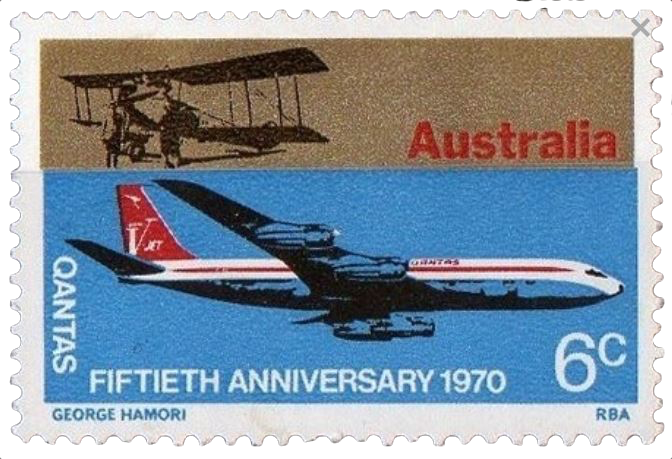 |

✈ Support Flightline in 10 Seconds Keep Flightline Flying Click our Amazon link before you shop. No extra cost to you. A small commission for us. It helps fund the data, analytics, and server costs behind every Flightline issue. |  |
Aviation Safety & Security
Boston Logan International Airport (BOS) will launch what officials are calling the first remote Transportation Security Administration (TSA) screening terminal of its kind in the United States on June 1, allowing select passengers to complete security screening roughly 25 miles from the airport in Framingham, Massachusetts. Under the new “Straight to Gate” pilot program, travelers on select Delta Air Lines and JetBlue Airways (B6) flights will check bags, clear TSA screening, and board secure shuttle buses that deliver passengers directly into Logan’s post-security gate areas. The program, developed by Massport, the TSA, and mobility company Landline, is designed to reduce congestion at BOS while streamlining the passenger experience. Officials said the Framingham site could become a model for future off-airport screening facilities elsewhere in the United States if the trial proves successful.
As of December 31, 2025, TSA had 60,696 employees on the books, including 52,102 airport screeners.
UPDATE: Major U.S. airlines are pushing back against a Trump administration proposal that would require smaller airports to replace federal TSA officers with private security contractors under an expanded privatization initiative tied to TSA Gold+ and the existing Screening Partnership Program. Airlines for America warned lawmakers that privatized screening should remain optional rather than mandatory, citing concerns over operational consistency and aviation security standards. The proposal is part of a broader plan to cut more than 9,400 TSA positions and reduce the agency’s budget by roughly 20 percent, while shifting thousands of screening jobs to private contractors at smaller airports. Supporters argue privatization could improve efficiency and reduce disruption during federal shutdowns, while critics, including airlines and TSA labor groups, warn it could create uneven security standards and weaken the federal screening system.
The Federal Aviation Administration (FAA) has closed its investigation into whether U.S. airlines complied with mandated flight reductions imposed during the 2025 federal government shutdown, opting not to issue any fines despite earlier threats of penalties reaching up to $75,000 per non-compliant flight. FAA Administrator Bryan Bedford told Congress that after reviewing airline operations at 40 major airports, the agency determined all carriers except one were in “substantial compliance” with the temporary restrictions, with the lone non-compliant airline receiving only an administrative warning. The emergency flight reductions had originally been implemented to ease pressure on the U.S. air traffic control system during the 43-day shutdown, when staffing shortages and controller absences raised operational safety concerns nationwide.
Canadian authorities are investigating an international baggage-tag switching scheme in which travelers departing Canada allegedly had legitimate luggage tags removed and replaced with tags linked to drug-smuggling operations. According to investigators, the scheme involved flights from Canadian airports to countries where narcotics trafficking can carry severe penalties, including possible death sentences. Officials said smugglers allegedly exploited airport baggage systems by attaching counterfeit or swapped tags to unsuspecting passengers’ luggage, potentially turning travelers into unwitting drug couriers. The investigation has raised renewed concerns about airport security procedures, baggage handling vulnerabilities, and the risks facing international travelers flying to jurisdictions with extremely strict drug enforcement laws.
Singapore’s Transport Safety Investigation Bureau has released a final report covering Singapore Airlines (SQ) Fl. 321, which encountered severe turbulence over Southwest Myanmar on May 21, 2024, resulting in one fatality, 56 serious injuries, and 23 minor injuries among the 229 people onboard. The final investigation report found the aircraft likely encountered an intense rapidly developing convective weather cell that generated extreme updrafts estimated at 8,000 to 9,000 feet per minute, causing violent altitude and acceleration changes within seconds. Investigators also examined recurring weather radar anomalies on the aircraft, including prior “under-painting” and “no-painting” issues where hazardous weather was not properly displayed to pilots, although no definitive hardware fault was identified. The aircraft diverted safely to Bangkok following the event, with the report again underscoring the dangers of clear-air and convectively induced turbulence, particularly near rapidly developing tropical weather systems. The report is attached below:

Aviation Industry News
Airservices Australia, which manages air traffic in the country, managed 75,301 passenger flights in March.
Saudi Arabia’s airports handled 140.9 million passengers during 2025, representing a 9.6 percent year-over-year increase as the Kingdom continued its aggressive aviation expansion under Vision 2030. International passenger traffic reached 75.8 million travelers, up 9.4 percent, while domestic traffic climbed to 65.1 million passengers, an 11 percent increase from 2024. Saudi authorities attributed the growth to expanding airline networks, tourism initiatives, and ongoing infrastructure investments designed to position the Kingdom as a major global aviation and transit hub.
Berkshire Hathaway has disclosed a major new investment in Delta Air Lines, acquiring approximately 39.8 million shares valued at roughly $2.65 billion, giving Warren Buffett’s conglomerate a 6.1 percent ownership stake in the carrier. The move represents one of Berkshire’s largest airline investments in years and signals renewed confidence in Delta’s long-term profitability, premium revenue strategy, and operational performance as global travel demand remains strong despite broader economic uncertainty and elevated fuel price concerns.
Boeing delivered 47 commercial aircraft during April 2026, including approximately 35 Boeing 737 MAX aircraft, six 787s, three 777s, and two 767s. The manufacturer also booked 136 gross new orders during the month, highlighted by strong widebody demand that included 51 Dreamliner orders and 28 new 777X commitments. Year-to-date, Boeing has delivered 190 aircraft through the first four months of 2026, slightly ahead of rival Airbus’ 181 deliveries over the same period, though April deliveries still fell short of some Wall Street expectations.
Chinese carriers significantly reduced planned Southeast Asia service in the second quarter of 2026. For May and June, one-way flights from China to Southeast Asia fell 14 percent. Cambodia saw the largest reduction at 35 percent, followed by Malaysia at 25 percent, Laos at 20 percent, Vietnam at 17 percent, Thailand at 10 percent, and Singapore at 9 percent.
Irish discounter Ryanair (FR) reported record fiscal year 2026 after-tax profits of €2.26 billion, a 40 percent increase year-over-year, as Europe’s largest low-cost carrier continued to capitalize on strong leisure demand, higher fares, and expanding passenger traffic despite Boeing delivery delays and growing fuel market uncertainty tied to Middle East tensions. The airline carried a record 208 million passengers during the fiscal year ending March 31, 2026, while total revenue climbed roughly 11 percent to more than €15.5 billion. CEO Michael O’Leary credited resilient European travel demand, disciplined capacity growth among competitors, and Ryanair’s fuel hedging strategy for helping offset rising operating costs, though the carrier warned that softer summer pricing and geopolitical volatility could pressure margins in fiscal year 2027.
Qatar Airways (QR) reported one of the strongest financial performances in its history for the 2024/25 fiscal year, posting a net profit of approximately $2.15 billion, up 28 percent year over year. Group revenue rose to roughly $23.2 billion to $23.6 billion, supported by strong premium travel demand, cargo growth, and expanding global operations through Doha. The carrier transported 43.1 million passengers during the fiscal year with an average load factor near 85 percent, while cargo revenue increased 17 percent as the airline continued benefiting from resilient global freight demand.

There is growing speculation that Emirates (EK) could eventually seek Seventh Freedom rights to operate nonstop service between Tel Aviv and New York Kennedy, a move that would dramatically reshape one of the world’s most lucrative long-haul markets. Israeli media reports indicate the Israeli government has discussed offering Emirates expanded traffic rights beyond traditional Fifth Freedom operations, potentially allowing the carrier to fly Tel Aviv and New York without continuing on to Dubai (DXB).
Such a route would almost certainly trigger fierce opposition from U.S. legacy carriers and Israeli airlines, particularly given Emirates’ reputation for premium service and aggressive pricing on existing fifth freedom transatlantic routes like New York Kennedy to Milan Malpensa (MXP) and the Newark, N.J. (EWR) to Athens (ATH) route. While the proposal remains highly speculative and would still require U.S. government approval, the mere discussion highlights how the Abraham Accords continue reshaping aviation dynamics across the Middle East and North Atlantic markets.
Singapore Airlines reported a 57.4 percent decline in net profit for fiscal year 2025/26, with earnings falling to approximately $927 million, largely due to losses tied to its 25.1 percent stake in Air India and the absence of a one-time gain booked during the Air India-Vistara integration the previous year. Despite the sharp drop in net income, the carrier posted record annual revenue of roughly $16.1 billion and carried a record 42.4 million passengers as strong premium and long-haul demand continued. Singapore Airlines also warned that rising jet fuel prices linked to Middle East instability are expected to pressure margins further in the coming year.
Turkish Airlines (TK) flew 7.2 million passengers in April, a decline of nearly three percent from April 2025. The airline’s 536-aircraft fleet traveled to 358 destinations across 44,738 passenger flights. System-wide load factor for the month was 83.4 percent.
Cathay Pacific (CX) transported 2,764,946 passengers in April 2026 across 10,722 flights, with traffic increasing 16.5 percent year over year and load factor reaching 88.2 percent. Meanwhile, HK Express (UO) carried 729,846 passengers during the month across 4,064 flights, up 5 percent year over year, with an 82 percent load factor.
The Japan Airlines Group carried 3,532,357 passengers during April, including 662,768 travelers on international flights, where load factor reached nearly 86 percent. Domestically, the group transported 2,869,589 passengers, with 78.3 percent of available revenue seats filled during the month.
Meanwhile, the All Nippon Airways Group flew 4,249,632 passengers in April. International operations accounted for 804,339 travelers, with international load factor reaching 86.3 percent. Domestically, All Nippon Airways (NH) carried 3,445,293 passengers, an increase of just over six percent compared to April 2025, while filling 74.5 percent of available revenue seats on domestic sectors.

Australian startup airline Zinc is positioning itself as an ultra low-cost carrier modeled heavily on Ryanair, with former Qantas and Jetstar executive Peter Kelly leading the project. The carrier is targeting a potential 2026 launch from the new Western Sydney International Airport (WSI), aiming to exploit the airport’s lower costs and lack of slot restrictions compared to Sydney Kingsford Smith. Zinc plans to operate a single-type fleet of high-density Airbus A321neo aircraft, reportedly configured with up to 244 seats, while focusing initially on major domestic trunk routes linking Sydney (SYD) with Adelaide (ADL), Brisbane (BNE), and Melbourne (MLB). The airline is seeking roughly A$200 million in startup funding and intends to follow a Ryanair-style model built around high aircraft utilization, aggressive cost control, and stimulation of price-sensitive leisure demand. Industry observers remain cautious given the collapse of recent Australian entrants such as Bonza, although Zinc argues that WSI’s opening creates a rare structural opportunity for a new low-cost competitor in the Australian market.
Russian airlines are expected to serve fewer international destinations during the summer 2026 season than at any point since the Cold War, as sanctions, airspace restrictions, and ongoing geopolitical tensions continue to isolate the country’s aviation sector. Industry estimates indicate Russian carriers will offer nonstop service to just 32 countries this summer, down roughly 25 percent from the winter schedule and nearly three times fewer destinations than were accessible during the Soviet era. Routes to destinations including Algeria, Cuba, Venezuela, and the Seychelles have already disappeared from schedules, while broader Middle East instability has further disrupted access to Gulf markets. Russian travel industry groups also warned that only around 15 countries may remain realistically viable for organized mass tourism due to sanctions, airspace closures, and government travel restrictions.
Thailand is moving to tighten entry rules for foreign visitors by reducing its visa-free stay period from 60 days back to 30 days for travelers from more than 90 countries, including the United States, United Kingdom, Australia, and much of Europe. Thai officials said the rollback is aimed at combating illegal work, transnational crime, visa abuse, and misconduct by some foreign visitors after authorities reported growing concerns over foreigners using extended tourist stays to operate unauthorized businesses or engage in criminal activity. The revised framework may also reduce visa-free stays to 15 days for some nationalities and reintroduce stricter limits on land-border entries, although implementation timing has not yet been finalized. Tourism remains critical to Thailand’s economy, accounting for more than 10 percent of GDP, but officials said the government now wants to prioritize “quality tourists” over maximizing visitor volume.

Southwest Airlines (WN) has updated its baggage and cabin policies to prohibit “human-like” and “animal-like” robots from traveling onboard aircraft following a pair of unusual incidents involving humanoid robots flying as ticketed passengers. The policy shift came after one robot named “Bebop” caused an approximately one-hour delay on an Oakland (OAK) to San Diego (SAN) flight due to concerns surrounding lithium-ion battery limits and seating compliance, while another robot named “Stewie” drew widespread attention on a Las Vegas (LAS) to Dallas Love Field (DAL) flight. Southwest cited onboard safety concerns tied primarily to large lithium-ion batteries, though the incidents themselves remain extremely rare and appear to have involved only a small handful of publicity-driven flights rather than any widespread operational trend.
U.S. scheduled-service passenger airlines employed 558,480 workers in March 2026, or 54 percent of the industry-wide total. Passenger airlines gained 3,069 employees in March 2026. United Airlines led scheduled passenger carriers, adding 1,143 employees; American Airlines (AA) added 1,068, and Delta Air Lines added 783.

March 2026 Airport Passenger Traffic Totals
We’ve compiled March 2026 airport passenger traffic totals for nearly 750 airports around the world. To my knowledge, this is the largest collection in one place anywhere online.
🔒 Paid subscribers receive the full dataset, detailed airport level breakdowns, and archive access. Upgrade now for complete visibility beyond this sample 15 airports.

Air Cargo
U.S. cargo airlines employed 466,366 workers in March 2026, or 46 percent of the industry-wide total. Cargo carriers lost 599 employees in March. FedEx (FX), the leading air cargo employer, decreased employment by 553 jobs.
U.S. cargo airlines are urging the Trump administration to temporarily suspend federal jet fuel taxes as carriers grapple with sharply higher fuel costs tied to instability in the Middle East and disruptions in global energy markets. The National Air Carrier Association, which represents operators including Atlas Air (5Y) and Amerijet (M6), warned that rising fuel prices are increasing costs across the air cargo supply chain and driving up prices for goods ranging from medical supplies to perishables and electronics. The group argues that suspending federal excise taxes on jet fuel would provide immediate relief to airlines, preserve cargo capacity, and help limit broader inflationary pressure on the U.S. economy as carriers continue facing elevated operating costs.
Cathay Pacific Cargo carried 144,341 tons of cargo in April, which was up over eight percent from April 2025. Cathay flew 1,238 dedicated cargo flights during the month.
✈️ Support the Mission Our sponsor links are the engine that keeps Flightline running. Clicking the ads below helps us cover the rising costs of aviation data and monthly hosting fees. We appreciate your help in keeping the hangar open!
Your Analytics Stack Is One Database Too Many

Pipelines, backfills, sync lag, data drift… that's the cost of splitting your stack. Tiger Cloud extends Postgres, fully managed, so analytics run on live data. No second system. Stay on Postgres. Scale on Postgres.Try Tiger Cloud free.
📈 Flightline Financials 🏦
| Airline & Airport Operator Stock Prices Most Recent Closing Price | |||
| AAL American $12.95 | AERO AeroMéxico $15.15 | ALGT Allegiant $77.09 | ALK Alaska $39.85 |
| BA Boeing $222.20 | CPA Copa $135.63 | DAL Delta $74.12 | EMBJ Embraer $56.48 |
| JBLU JetBlue $4.73 | LTM LATAM $50.37 | LUV Southwest $39.70 | RJET Republic $20.61 |
| RYAAY Ryanair $56.89 | SKYW SkyWest $83.29 | UAL United $98.02 | ULCC Frontier $4.69 |
| VLRS Volaris $6.68 | BRENT CRUDE OIL Per Barrel $106.12 | ||
| ASR Asur $310.50 | OMAB OMA $105.13 | PAC GAP $250.82 | CAAP Corp America $24.84 |
| Global Currency Exchange Rates $1 USD Equals: | |||
| EUR Euro 0.86 | GBP British Pound 0.74 | MXN Mexican Peso 17.32 | CAD Canadian Dollar 1.37 |
Daily Passenger Counts at U.S. Airports, 2026 vs. 2025

A Note of Thanks

Flightline is written for readers who care deeply about commercial aviation, from routes and fleets to security, policy, and data. Subscriber support allows this publication to remain independent, focused, and free of advertising influence.
If you find Flightline valuable, sharing it with a colleague or fellow aviation enthusiast is the simplest way to help it grow responsibly.
🔗 Follow Flightline
2025 Global Traffic Report
Passenger totals for nearly 1,300 airports across
120+ countries in one searchable file.
Bluesky |
Instagram |
Facebook |
X |
LinkedIn
Flightline.news
Have a news tip to share? Send anonymously via Signal to Flightline.47


