 95
95
What’s Inside
- Lufthansa Group Fleet Overhaul: A massive $7.7 billion investment in 20 new Airbus A350 and Boeing 787 aircraft.
- Route Intelligence: Extensive service suspensions by Air India and seasonal cuts across North America by Air Canada.
- J.D. Power Results: JetBlue and Delta lead the pack in North American passenger satisfaction rankings.
- Boeing 737 MAX 7 Update: Inside the anti-ice system redesign and the regulatory hurdles delaying Southwest’s fleet renewal.
- Safety Reports: Investigations into a fatal runway intrusion at Denver and a ground handling accident in Orlando.
Access the full datasets, global fleet movements, and expert context relied on by industry leaders.
Route Intelligence Report
Jeju Air (7C) launched 2x weekly service from Jeju, South Korea (CJU) to Seoul Incheon (ICN) on Tuesday. This route is operated by Boeing 737-800 aircraft.
China Eastern (MU) will launch 3x weekly service from Shanghai Pu Dong (PVG) to Dublin, Ireland (DUB) on July 20. Dublin spotters can look for an Airbus A350-900 on this one.
🔒 Subscribers unlock the complete weekly route dataset.
Missing from this preview:New routes
Subscribers receive the full overview of all weekly network additions and frequency changes, including another U.S. carrier’s upcoming return to Venezuela and Qatar Airways expanding its long-haul network.
Qantas (QF) will suspend service from Sydney (SYD) to Bangalore, India (BLR) from August 8 until October 24. This 6x weekly route is typically operated by Airbus A330-200 aircraft.
Air Macau (NX) has significantly reduced its operations from May 1 to June 30. One-way departures from Macau (MFM) have been cut by 26 percent.
🔒 Subscribers also receive the full dropped and suspended route file.
Missing from this preview:Air Canada, Iberia, and WestJet suspend or drop routes; Air India suspends several long-haul routes.
The subscriber version includes complete exit markets, restart timing, and the full weekly network pull in one place.
✈️ Support the Mission Our sponsor links are the engine that keeps Flightline running. Clicking the ads below helps us cover the rising costs of aviation data and monthly hosting fees. We appreciate your help in keeping the hangar open!
Learn how to code faster with AI in 5 mins a day

You're spending 40 hours a week writing code that AI could do in 10.
While you're grinding through pull requests, 200k+ engineers at OpenAI, Google & Meta are using AI to ship faster.
How?
The Code newsletter teaches them exactly which AI tools to use and how to use them.
Here's what you get:
AI coding techniques used by top engineers at top companies in just 5 mins a day
Tools and workflows that cut your coding time in half
Tech insights that keep you 6 months ahead
Sign up and get access to the Ultimate Claude code guide to ship 5X faster.
Fleet Intelligence
LATEST AIRCRAFT DELIVERIES
🇲🇹 9H-AMV, an Airbus A320-232, was delivered to Eurowings (EW) on May 10.
🇲🇹 9H-XLE, an Airbus A321-271NY XLR, was delivered to Wizz Air Malta (W4) on May 11.
🇲🇾 9M-BJA, an ATR 72-600 (72-212A), was delivered to Berjaya Air (J8) on May 11.
🇮🇹 EI-HXH, an Airbus A321-271neo, was delivered to ITA Airways (AZ) on May 12.
🇪🇹 ET-APL, a Boeing 737-860(WL), was delivered to Uganda Airlines (UR) on May 12.
🇬🇧 G-SUNX, an Airbus A321-251neo, was delivered to Jet2 (LS) on May 13.
🇬🇧 G-TTSI, an Airbus A320-251neo, was delivered to British Airways (BA) on May 12.
🇭🇺 HA-LDJ, an Airbus A321-271neo, was delivered to Wizz Air (W6) on May 13.
🇭🇺 HA-LDO, an Airbus A321-271neo, was delivered to Wizz Air on May 12.
🇨🇴 HK-5485, an ATR 72-600 (72-212A), was delivered to SATENA (9R) on May 11.
🇳🇴 LN-SAG, an Airbus A320-251neo, was delivered to SAS Scandinavian Airlines (SK) on May 13.
🇺🇸 N3308J, an Airbus A220-300, was delivered to JetBlue (B6) on May 11.
🇺🇸 N344JA, an Embraer ERJ-175LR, was delivered to Envoy Air (MQ) on May 11.
🇺🇸 N609DN, an Airbus A321-271neo, was delivered to Delta Air Lines (DL) on May 13.
🇺🇸 N81105, a Boeing 787-9, was delivered to United Airlines on May 12.
🇮🇩 PK-TLM, an Airbus A321-211, was delivered to TransNusa (8B) on May 10.
LATEST AIRCRAFT RETIREMENTS
🇲🇹 9H-MLW, an Airbus A320-214 with Avion Express Malta (4X), was withdrawn from use (wfu) and ferried on May 13 to St. Athan, Wales (DGX) for part-out and scrap.
🇪🇸 EC-ILR, an Airbus A320-214 with Iberia Express (I2), was wfu and ferried on May 7 to St. Athan, Wales for part-out and scrap.
Flightline Feature Stamp Collection | 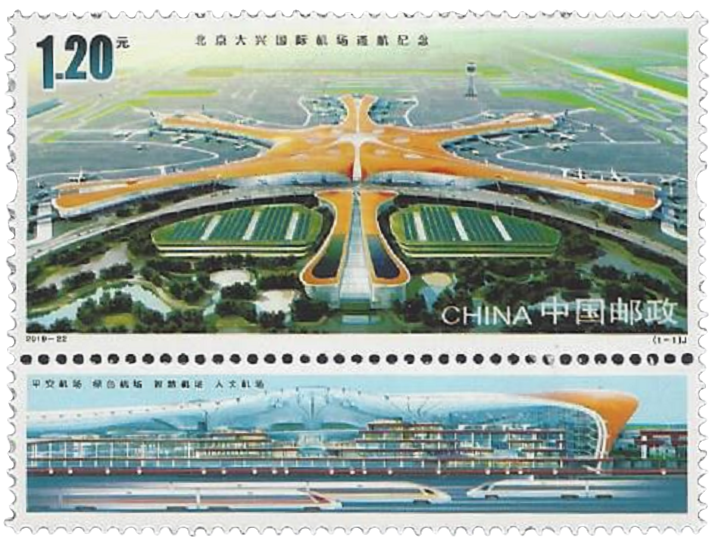 |

✈ Support Flightline in 10 Seconds Keep Flightline Flying Click our Amazon link before you shop. No extra cost to you. A small commission for us. It helps fund the data, analytics, and server costs behind every Flightline issue. |  |
Aviation Safety & Security

Authorities investigating the fatal runway intrusion involving a Frontier Airlines (F9) Airbus A321neo (N646FR) at Denver (DEN) identified the deceased man as 41-year-old Michael Mott, who reportedly had more than 20 prior arrests in Colorado dating back to 2002, including charges involving attempted murder, assault, domestic violence, trespassing, and resisting arrest. Officials said Mott breached an eight-foot barbed wire perimeter fence May 8 and reached Runway 17L, where he was struck by Frontier Flight 4345 during takeoff for Los Angeles (LAX), triggering an engine fire and emergency evacuation of the aircraft. The Denver medical examiner ruled the death a suicide, while investigators continue reviewing airport perimeter security procedures after officials acknowledged ground detection alarms were initially mistaken for wildlife activity near the airfield.
Passengers aboard that flight are reportedly preparing a class action lawsuit against the Denver International Airport and the City of Denver. Attorneys representing several passengers allege the airport failed to properly secure the perimeter fence and mishandled the emergency response and evacuation process after the aircraft aborted takeoff and experienced an engine fire. The proposed lawsuit is expected to focus on claims tied to alleged security failures, passenger trauma, injuries sustained during the evacuation, and claims that travelers were left onboard in unsafe conditions for an extended period following the accident.
Aviation Industry News
A Delta Air Lines employee was killed May 7 in a ground handling accident at Orlando (MCO) after an aircraft tug reportedly struck a passenger boarding bridge connected to Delta Flight 2593. The incident occurred around 10:55 p.m. local time while the Airbus A321 (N324DX) was parked at the gate preparing for departure to Minneapolis (MSP). Passengers were evacuated through the aircraft’s rear door and the flight was canceled following the accident. Delta temporarily paused operations at its Orlando station and said it was “heartbroken at the loss of a team member,” while local authorities and the Federal Aviation Administration (FAA) continue to investigate the circumstances surrounding the fatal incident.

The Lufthansa Group announced an order for 20 additional long-haul aircraft split evenly between 10 Airbus A350-900s and 10 Boeing 787-9s as part of what the carrier describes as the largest fleet modernization program in its history. The order, valued at approximately $7.7 billion at list prices, will see deliveries take place between 2032 and 2034 and is intended to replace older, less fuel-efficient widebody aircraft across the group, including aging Airbus A340s, Boeing 747-400s, and earlier generation twin-aisle aircraft. Lufthansa (LH) said the aircraft have not yet been assigned to specific airlines or hubs within the group, which includes Swiss (LX), Austrian Airlines (OS), Brussels Airlines (SN), and Discover Airlines (4Y), though the new jets are expected to support lower fuel burn, reduced emissions, and improved premium cabin offerings across the carrier’s long-haul network. The Lufthansa Group now has 232 aircraft on order including over 100 long-haul frames.
Cologne, Germany (CGN) reported a €13.5 million net profit for 2025, marking its fourth consecutive profitable year despite rising operating costs and continued pressure on the German aviation market. The airport handled just over 10 million passengers during the year, supported by strong leisure demand to destinations in Spain, Greece, and Türkiye, while cargo volumes remained stable at roughly 840,000 metric tons. Revenue increased significantly to €444.2 million, aided by the airport assuming responsibility for passenger security screening operations, as Cologne also continues a major infrastructure modernization program that includes expanded CT security screening technology.
According to a recent report from the U.S. Bureau of Transportation Statistics, U.S. airlines posted a combined $6.0 billion profit in 2025, representing a decline from 2024 results as operating costs continued to rise across the industry. While carriers benefited from strong passenger demand and continued recovery in international travel, higher labor expenses, fuel costs, aircraft maintenance, and operational disruptions weighed on overall profitability. The report noted that passenger airlines generated hundreds of billions in operating revenue during the year, though profit margins narrowed compared to 2024 despite sustained travel demand and relatively high load factors across much of the domestic network. U.S. airlines took in $7.4 billion in baggage fees last year and another $1.1 billion from reservation change fees.
A new report highlighted a sharp decline in Canadian travel to the United States, with researchers from the University of Toronto finding visits to major U.S. metropolitan areas dropped approximately 42 percent between April 2024 and March 2026, significantly worse than the roughly 25 percent decline reflected in official border crossing data.
Riyadh Air (RX) has applied with the U.S. Department of Transportation (DOT) for a Foreign Air Carrier Permit (FACP). The carrier looks to begin direct flights from Saudi Arabia to the U.S., although no city pairs are listed in the application.
Boeing is increasingly positioning its long term recovery around renewed access to the Chinese market, support from the Trump administration, and the eventual development of a next generation narrowbody aircraft expected to succeed the 737 family. Discussions tied to President Donald Trump’s upcoming visit to China could reportedly include a major order for approximately 500 Boeing aircraft, primarily 737 MAX jets, which would represent China’s first large scale Boeing purchase in several years. At the same time, Boeing continues working to restore public confidence and stabilize operations following multiple safety, certification, and production crises, while also facing ongoing challenges tied to 777X certification delays, Air Force One program overruns, supply chain constraints, and pressure to improve financial performance and competitiveness against Airbus.
Mexico’s Viva (VB) suffered a seven percent year-on-year drop in April passenger traffic, with the discounter flying 2,339,000 passengers last month. System-wide load factor for the months was 84.1 percent, down 2.5 points from one year ago. Responding to fuel concerns, Viva dropped its available seat miles by nearly eight percent in the month.
🇧🇷 March 2026 Brazilian Airport Passenger Traffic
Below we look at March 2026 airport passenger counts for over two dozen airports throughout Brazil. Monday’s issue will feature well over 500 airports around the world and their March totals.
🔒 Paid subscribers receive the full dataset, detailed airport level breakdowns, and archive access. Upgrade now for complete visibility.


Emirates (EK) unveiled a new special livery on Airbus A380 (A6-EVG) featuring a massive United Arab Emirates flag stretching across both sides of the fuselage in a three dimensional design inspired by the carrier’s iconic tail colors. The airline said the aircraft was created as part of its “This Flag Will Always Fly” campaign and serves as a tribute to the unity, ambition, and resilience of the United Arab Emirates. The specially painted A380 is now back in revenue service with Emirates confirming the design will later be applied to a Boeing 777-300(ER) as well.
Data aggregator Cirium has released its monthly on-time performance results for airlines around the world in April. Let’s have a look at the most on-time airlines in the Asia/Pacific theatre as well as Europe. Monday’s issue will look at Latin American and Africa/Middle Eastern airlines.
🔒 Paid subscribers receive the full dataset, detailed airport level breakdowns, and archive access. Upgrade now for complete visibility.

2026 J.D. Power North America Airline Satisfaction Study Results
The 2026 J.D. Power North America Airline Satisfaction Study found that overall passenger satisfaction increased despite a year marked by delays, cancellations, airport congestion, and rising fares and ancillary fees. Overall satisfaction rose eight points year over year on J.D. Power’s 1,000-point scale, with gains recorded across all cabin segments. The study surveyed 10,914 passengers who had flown on a major North American airline within the previous month between March 2025 and March 2026.
J.D. Power said airlines benefited from relatively resilient passenger demand and improving customer experience metrics, even as operational disruptions remained elevated. The study evaluated airlines across categories including airline staff, digital tools, ease of travel, level of trust, onboard experience, pre and post flight services, and value for price paid.
First / Business Class Rankings
JetBlue Airways — 738
Delta Air Lines — 724
Alaska Airlines — 709
United Airlines — 690
Air Canada — 686
American Airlines — 684
Delta Air Lines — 717
JetBlue Airways — 699
Alaska Airlines — 691
United Airlines — 652
American Airlines — 650
Air Canada — 616
WestJet — 614
Economy / Basic Economy Rankings
Southwest Airlines — 694
JetBlue Airways — 663
Delta Air Lines — 662
Alaska Airlines — 645
Allegiant Air — 636
United Airlines — 603
American Airlines — 597
Air Canada — 561
WestJet — 537
Spirit Airlines — 526
Frontier Airlines — 520
Additional findings from the study showed that premium cabin satisfaction improved the most year over year, with first/business class scores increasing 17 points and premium economy climbing 14 points, while economy/basic economy improved six points.
Southwest Airlines (WN) recently suggested the Boeing 737 MAX 7 could be certified by August, with the Dallas-based carrier set to start revenue service with the type in early 2027. The MAX 7 (and MAX 10) certifications have been long-delayed, which some people may find odd as the MAX 8 and MAX 9 have been certified and in service for many years now. Why?

While the 737 MAX 7 might appear to be simply a shorter derivative of the MAX 8, the certification delay is primarily tied to a significant engine anti-ice system redesign and a much stricter Federal Aviation Administration (FAA) certification environment following the original MAX grounding crisis.
The central issue involves the aircraft’s Engine Anti-Ice (EAI) system. Boeing and regulators determined that if the system remains activated for extended periods in dry air, rather than actual icing conditions, temperatures inside the engine inlet structure can rise excessively. In extreme scenarios, overheating could damage the inlet cowl structure and create the risk of component separation. Existing 737 MAX 8 and MAX 9 aircraft already operate with procedural limitations requiring pilots to disable the system when icing conditions are not present, but the FAA has signaled it is unwilling to certify the MAX 7 and MAX 10 using the same operational workaround alone.
As a result, Boeing was required to develop and validate a permanent engineering fix for the system before certification could proceed. FAA-supervised certification flight testing for the revised anti-ice configuration began during 2026, representing one of the final major technical hurdles for the aircraft.
The delay also reflects a broader shift in the FAA’s post-MAX oversight philosophy. Historically, Boeing certified shorter and longer 737 variants through amended type certificates, leveraging substantial commonality with earlier models. Following the MAX grounding crisis, however, regulators adopted a far more conservative approach toward exemptions, procedural mitigations, and “grandfathered” systems that no longer fully align with modern certification expectations. Additional scrutiny tied to the Aircraft Certification, Safety, and Accountability Act further complicated the timeline, particularly regarding cockpit alerting and system architecture standards.
For Southwest, the MAX 7 remains strategically important. The carrier has more than 260 aircraft on order and views the type as the direct long term replacement for its aging Boeing 737-700 fleet. The MAX 7 offers improved economics, approximately 14 percent better fuel efficiency, and greater operational range compared to the -700. Until certification is secured, Southwest is forced to continue operating older aircraft or deploy larger MAX 8s on thinner routes where the additional capacity may reduce profitability.
Current industry expectations place MAX 7 certification sometime during the second half of 2026, assuming no additional technical or regulatory setbacks emerge during final testing. Southwest would then require several additional months for pilot training, operational integration, maintenance program approvals, and fleet introduction work before placing the aircraft into commercial service, pushing likely revenue operations into early 2027.
✈️ Support the Mission Our sponsor links are the engine that keeps Flightline running. Clicking the ads below helps us cover the rising costs of aviation data and monthly hosting fees. We appreciate your help in keeping the hangar open!
Go from AI overwhelmed to AI savvy professional

AI will eliminate 300 million jobs in the next 5 years.
Yours doesn't have to be one of them.
Here's how to future-proof your career:
Join the Superhuman AI newsletter - read by 1M+ professionals
Learn AI skills in 3 mins a day
Become the AI expert on your team
📈 Flightline Financials 🏦
|
Airline & Airport Operator Stock Prices Most Recent Closing Price |
|||
|
AAL American $12.71 |
AERO AeroMéxico $15.23 |
ALGT Allegiant $75.21 |
ALK Alaska $38.56 |
|
BA Boeing $240.60 |
CPA Copa $114.92 |
DAL Delta $71.05 |
EMBJ Embraer $58.26 |
|
JBLU JetBlue $4.70 |
LTM LATAM $47.73 |
LUV Southwest $39.41 |
RJET Republic $22.13 |
|
RYAAY Ryanair $54.94 |
SNCY Sun Country $16.17 |
SKYW SkyWest $84.92 |
UAL United $95.70 |
|
ULCC Frontier $4.72 |
VLRS Volaris $7.28 |
BRENT CRUDE OIL Per Barrel $105.72 |
|
|
ASR Asur $305.21 |
OMAB OMA $105.86 |
PAC GAP $244.88 |
CAAP Corp America $23.85 |
|
Global Currency Exchange Rates $1 USD Equals: |
|||
|
EUR Euro 0.85 |
GBP British Pound 0.74 |
MXN Mexican Peso 17.18 |
CAD Canadian Dollar 1.37 |
Daily Passenger Counts at U.S. Airports, 2026 vs. 2025

A Note of Thanks

Flightline is written for readers who care deeply about commercial aviation, from routes and fleets to security, policy, and data. Subscriber support allows this publication to remain independent, focused, and free of advertising influence.
If you find Flightline valuable, sharing it with a colleague or fellow aviation enthusiast is the simplest way to help it grow responsibly.
🔗 Follow Flightline
2025 Global Traffic Report
Passenger totals for nearly 1,300 airports across
120+ countries in one searchable file.
Bluesky |
Instagram |
Facebook |
X |
LinkedIn
Flightline.news
Have a news tip to share? Send anonymously via Signal to Flightline.47


