In partnership with


 91
91
What’s Inside
- Spirit Airlines Collapse: The end of the ULCC pioneer as geopolitical fuel spikes exhaust liquidity.
- Porter’s Transborder Push: Massive winter 2026 expansion from Canada to sun destinations.
- The Loyalty Subsidy: Analyzing how American Airlines’ credit card revenue masks core flying losses.
- Safety Spotlight: New details on the 2024 Jeju Air Flight 2216 crash and airport barrier standards.
- Service Reductions: Delta and United trim short-haul beverage service and regional frequencies.
Access the full datasets, global fleet movements, and expert context relied on by industry leaders.
Spirit Airlines’ (NK) Saturday collapse marks the end of one of the most consequential and controversial business models in modern aviation. Founded in the early 1980s as Charter One and later rebranded as Spirit in 1992, the airline pioneered the ultra-low-cost carrier model in the United States, stripping fares down to the base ticket and charging separately for everything else. That approach fundamentally reshaped pricing across the industry, forcing legacy carriers to introduce basic economy and unbundled fares to compete, while making air travel accessible to millions of price-sensitive passengers.
For years, the model worked. Spirit was consistently profitable before the pandemic and became a disruptive force across domestic leisure markets, particularly in Florida, the Caribbean, and Latin America. But structurally, the model began to crack after 2019. The airline has not posted an annual profit since 2019, with losses accelerating through the COVID recovery and into the mid-2020s as costs rose faster than its ability to generate revenue. The carrier accumulated more than $2.5 billion in losses since 2020, while also taking on significant debt and navigating repeated restructuring efforts.

At the same time, the broader market shifted away from Spirit’s core value proposition. Post pandemic travelers increasingly prioritized reliability, comfort, and premium offerings over the absolute lowest fare, eroding demand for the bare-bones experience that defined Spirit’s brand. Larger carriers responded by matching low fares while offering a better overall product, squeezing Spirit from both ends of the market. Attempts to pivot, including adding more premium seating and adjusting its network, proved insufficient against rising labor costs, operational disruptions, and intensifying competition.
By 2025 and early 2026, the financial picture had deteriorated sharply. The airline was posting multi-billion dollar annual losses, operating with deeply negative margins, and carrying a balance sheet burdened by heavy debt. Its restructuring strategy depended heavily on stable fuel prices and cost reductions that never materialized, leaving little margin for error.
Spirit’s exit does not create a major capacity gap in Central America, but it does remove a critical layer of low cost competition that had an outsized impact on pricing. While the airline accounted for only a small share of total U.S. to Latin America capacity, its network was heavily concentrated in Florida to Central America and Caribbean markets, particularly from Fort Lauderdale (FLL) and Orlando (MCO), where it served as a price anchor and frequency provider on leisure and VFR routes. Key markets included San José (SJO), Guatemala City (GUA), San Pedro Sula (SAP), and Belize City (BZE). Its departure is likely to lead to immediate fare increases and reduced service on thinner city pairs. However, the overall network will not remain underserved for long, as carriers like American Airlines (AA), JetBlue (B6), and Frontier Airlines (F9) are well positioned to backfill capacity. The result is not a loss of connectivity, but a shift toward higher fares, more disciplined capacity, and fewer ultra low cost options for price sensitive travelers.
The final blow came from geopolitics. The Iran war triggered a rapid surge in jet fuel prices, nearly doubling within weeks and overwhelming Spirit’s already fragile cost structure. With liquidity exhausted and no viable path to additional financing, the airline was unable to sustain operations. Spirit’s demise brings an abrupt end to one of the most influential low cost carriers in U.S. aviation history.
In the end, Spirit did not fail because the ultra low cost model was inherently flawed, but because the environment around it changed. It thrived in a world of stable fuel, highly price sensitive demand, and limited competitive overlap. It collapsed in an era defined by volatile energy markets, shifting consumer expectations, and relentless competition from larger, better capitalized airlines. Its legacy, however, is permanent. Spirit forced the industry to unbundle pricing and democratized air travel, even if it could not survive the system it helped create.
Route Intelligence Report
Flair Airlines (F8) will add 1 weekly Boeing 737-8 flight from Vancouver, Canada (YVR) to Leon/Guanajuato, Mexico (BJX) on October 3. This seasonal service operates until March 11 2027
Ryanair (FR) will add new service from Palermo, Italy (PMO) to the following destinations:
- Prague, Czech Republic (PRG) on October 25 (4 weekly flights)
- Sofia, Bulgaria (SOF) on October 27 (3 weekly flights)
🔒 Subscribers unlock the complete weekly route dataset.
Missing from this preview: Over a dozen Porter Airlines (PD) additions, Breeze Airways (MX) JetBlue (B6) fill Spirit losses, Cabo Verde Airlines (VR), United Airlines (UA), easyJet (U2), and Southwind Airlines (2S)
Subscribers receive the full overview of all weekly network additions and frequency changes.
Loganair (LM) will close its base in Dundee, Scotland (DND) in September 2026, resulting in the cancellation of service to the following destinations:
- Kirkwall, Scotland (KOI)
- London Heathrow (LHR)
- Sumburgh, Scotland (LSI)
SunExpress (XQ) has axed its planned route between Bodrum, Turkey (BJV) and London Gatwick (LGW), with all flights removed from the booking system
🔒 Subscribers also receive the full dropped and suspended route file.
Missing from this preview: United Airlines (UA) delays several regional routes and JSX (XE) drops.
The subscriber version includes complete exit markets, restart timing, and the full weekly network pull in one place.
✈️ Support the Mission Our sponsor links are the engine that keeps Flightline running. Clicking the ads below helps us cover the rising costs of aviation data and monthly hosting fees. We appreciate your help in keeping the hangar open!
Someone just spent $236,000,000 on a painting. Here’s why it matters for your wallet.

Late last year, a Klimt sold for the highest price ever paid for modern art at auction.
An outlier sure, but it wasn't a fluke. U.S. auction sales grew 23.1% in 2025. The $1-5mm segment even grew 40.8% YoY.
When the S&P 500 finished its worst quarter since 2022 last month, diversifiers like bonds and bitcoin fell too.
Even with the turnaround in mid-April, analysts at Goldman Sachs and Vanguard have projected low-single-digit annualized returns from 2024-2034.
So, what kind of investment is largely indifferent to the forces driving everything else?
Masterworks lets you invest in shares of artworks featuring legends like Banksy, Basquiat, and Picasso.
Access to an asset class with historically low correlation and attractive appreciation (‘95-’25).*
Net annualized returns on 28 sold works held 12 months+ like 14.6%, 17.6%, and 17.8%.
$1.3 billion invested across over 500 artworks.
Shares can sell quickly, but my subscribers can skip the waitlist:
*According to Masterworks data. Investing involves risk. Past performance is not indicative of future returns. See important Reg A disclosures at masterworks.com/cd.
Fleet Intelligence
LATEST AIRCRAFT DELIVERIES
🇬🇭 9G-KCT, a Boeing 737-476(SF), was delivered to Air Ghana (GH) on May 3.
🇲🇲 9M-XVC, an Airbus A321-251neo, was delivered to AirAsia (AK) on May 2.
🇲🇹 9H-MLX, an Airbus A320-232, was delivered to Eurowings (EW) on May 2.
🇨🇳 B-228D, a Boeing 737 MAX 8, was delivered to Shandong Airlines (SC) on May 1.
🇨🇳 B-228Q, a Boeing 737 MAX 8, was delivered to China Southern Airlines (CZ) on April 30.
🇨🇳 B-32KJ, an Airbus A319-153neo, was delivered to Tibet Airlines (TV) on April 30.
🇨🇦 C-FHHD, a Bombardier DHC-8-315 Dash 8 Q300, was delivered to Great North Airlines (H6) on April 30.
🇩🇪 D-AIKI, an Airbus A330-343, was delivered to Discover Airlines (4Y) on April 30.
🇮🇪 EI-ELA, an Airbus A330-302, was delivered to Aer Lingus (EI) on April 29.
🇬🇧 G-POWN, an Airbus A321-211, was delivered to Jet2 (LS) on May 1.
🇭🇺 HA-LDF, an Airbus A321-271neo, was delivered to Wizz Air (W6) on April 30.
🇰🇷 HL8734, a Boeing 787-10, was delivered to Korean Air (KE) on April 29.
🇵🇦 HP-9819CMP, a Boeing 737 MAX 8, was delivered to Copa Airlines (CM) on April 30.
🇯🇵 JA738A, a Boeing 737 MAX 8, was delivered to Skymark Airlines (BC) on April 30.
🇱🇹 LY-MLI, an Airbus A320-232, was delivered to Transavia (HV) on April 30.
🇺🇸 N17454, a Boeing 737 MAX 9, was delivered to United Airlines on May 2.
🇺🇸 N245FE, a Boeing 767-300F, was delivered to FedEx Express (FX) on April 30.
🇺🇸 N341DU, an Airbus A220-300, was delivered to Delta Air Lines (DL) on May 1.
🇺🇸 N555DE, an Airbus A321-271neo, was delivered to Delta Air Lines on April 30.
🇺🇸 N659FR, an Airbus A321-271neo, was delivered to Frontier Airlines on April 30.
🇺🇸 N838AK, a Boeing 737 MAX 8, was delivered to Alaska Airlines (AS) on April 30.
🇺🇸 N9001F, a Boeing 737 MAX 8, was delivered to Southwest Airlines (WN) on April 29.
🇨🇿 OK-TVL, a Boeing 737-8FN(WL), was delivered to Eurowings on April 30.
🇸🇪 SE-RSH, an Airbus A350-941, was delivered to SAS Scandinavian Airlines (SK) on April 30.
🇪🇬 SU-GGI, an Airbus A350-941, was delivered to Egyptair (MS) on May 3.
🇪🇬 SU-GGM, a Boeing 737 MAX 8, was delivered to Egyptair on May 1.
🇪🇬 SU-GGN, a Boeing 737 MAX 8, was delivered to Egyptair on May 2.
🇹🇷 TC-LRE, an Airbus A321-271neo, was delivered to Turkish Airlines (TK) on April 30.
🇹🇷 TC-OHY, a Boeing 737 MAX 8, was delivered to AJet (VF) on April 30.
🇹🇷 TC-RFY, an Airbus A321-251neo, was delivered to Pegasus (PC) on April 30.
🇸🇦 UK33031, an Airbus A330-343, was delivered to flyadeal (F3) on May 2.
🇦🇺 VH-8VH, a Boeing 737 MAX 8, was delivered to Virgin Australia (VA) on May 1.
🇦🇺 VH-OGF, an Airbus A321-271neo XLR, was delivered to Qantas (QF) on April 30.
🇮🇳 VT-NHT, an Airbus A321-251neo, was delivered to IndiGo (6E) on May 2.
🇮🇳 VT-NHV, an Airbus A321-251neo, was delivered to IndiGo on April 30.
🇲🇽 XA-AMZ, a Boeing 737 MAX 8, was delivered to Aeroméxico (AM) on April 30.
🇲🇽 XA-MXF, an Embraer E190-E2, was delivered to Mexicana (L7) on May 1.
🇲🇽 XA-VUZ, an Airbus A321-271neo, was delivered to Volaris (Y4) on April 30.
LATEST AIRCRAFT RETIREMENTS
🇲🇹 9H-SWI, an Airbus A320-232 with Avion Express Malta (X8), was withdrawn from use (wfu) and ferried on May 4 to Marana, Ariz. (MZJ) where it was returned to its lessor.
🇨🇦 C-GUFR, an Airbus A330-243 with Air Transat (AT), was wfu and ferried on April 30 to Knock, Ireland (NOC) for part-out and scrap.
🇫🇷 F-GRXB, an Airbus A319-111 with Air France (AF), was wfu and ferried on April 30 to Bydgoszcz, Poland (BZG) for part-out and scrap.
🇦🇺 VH-YXQ, an Airbus A320-232 with Jetstar Airways (JQ), was wfu and ferried on May 2 to Tainan, Taiwan (TNN) where it was returned to its lessor.
Flightline Feature Stamp Collection | 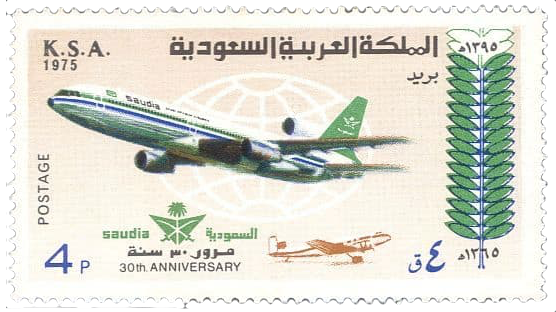 |

✈ Support Flightline in 10 Seconds Keep Flightline Flying Click our Amazon link before you shop. No extra cost to you. A small commission for us. It helps fund the data, analytics, and server costs behind every Flightline issue. |  |
Aviation Safety & Security
A passenger aboard a Delta Air Lines (DL) flight from Atlanta (ATL) to Chicago O’Hare faces federal charges for interfering with a flight crew after a disturbance prompted the aircraft to return to the gate. Following delays on April 27, the individual became increasingly aggressive, repeatedly refusing to remain seated before moving toward the front of the aircraft and opening the cabin door. Although the door did not fully open and the emergency slide remained retracted, the event caused passenger panic, requiring intervention from both a fellow traveler and the crew to secure the cabin before returning to the airport.
A 38-year-old woman’s death at Indianapolis International Airport on April 25, 2026, has been officially ruled a suicide following an investigation by the Marion County Coroner. According to authorities, the woman first contacted the airport’s operations center, prompting dispatchers to locate her using surveillance cameras while police were sent to intervene. During the call, she became increasingly distressed, moved across multiple lanes of traffic on the upper terminal drive, climbed over a retaining wall, and fell approximately 50 feet to a grassy area below. Emergency responders arrived within minutes and performed CPR and other life-saving measures, but she was pronounced dead shortly after.
Aviation Industry News
In March 2026, global passenger demand increased by two percent compared to the previous year, even as total capacity fell by 1.7 percent. This modest growth was heavily influenced by significant regional disparities, most notably a 60.8 percent drop in international traffic for Middle Eastern carriers due to regional conflict. While international demand overall saw a slight decline of 0.6 percent, domestic markets remained strong with a 6.5 percent increase, led by double digit growth in China and Brazil. Despite rising jet fuel costs and airspace restrictions, the industry maintained a high total load factor of 83.6 percent, reflecting resilient travel interest as the summer season approaches.
The New York Times has an interactive article that details the December 29, 2024 crash of Jeju Air (7C) Flight 2216, a Boeing 737-800 arriving from Bangkok (BKK) that attempted a gear-up emergency landing at Muan, South Korea (MWX) after a likely bird strike and possible engine issues. The aircraft touched down long, overran the runway, and collided with a rigid concrete structure supporting navigation equipment, triggering a catastrophic fire that killed 179 of the 181 people onboard. Subsequent analysis and leaked government findings suggest the impact with the non-frangible barrier was the decisive factor in the fatalities, with simulations indicating many passengers might have survived had the structure met international safety standards, highlighting systemic shortcomings in airport design, oversight, and risk mitigation.
Southwest Airlines (WN) staff stepped in to provide an emotional retirement send-off for a Spirit Airlines captain who was set to fly his retirement flight one day after the airline folded. The veteran pilot was scheduled to fly his final trip into Baltimore (BWI) when the airline went out of business, forcing him to instead board a Southwest flight as a passenger to get home. Upon learning of the situation from Jackson's son, who is a pilot for Southwest, the crew coordinated a water cannon salute and a terminal celebration in Baltimore. This gesture served as a powerful moment of solidarity within the aviation community during a difficult period that saw approximately 17,000 employees lose their jobs as jet fuel price increases and failed rescue talks ended the thirty-four year history of the carrier.

$54 billion in revenue, $111 million in profit, and $50 million to executives
American Airlines’ 2025 financials underscore a structural problem across the industry: massive revenue with almost no profitability from flying itself. The carrier generated $54.6 billion in revenue but only $111 million in net income (a .21 percent profit margin), an 87 percent drop year over year, as weakening yields, lower load factors, and rising labor costs eroded margins.
Critically, the numbers show that core airline operations are deeply unprofitable. American received $6.2 billion in cash from its co-branded credit card program, with roughly $3 billion in associated profit, implying that the airline’s actual flying business lost around $3 billion. This reinforces a broader trend you’ve read about in Flightline: U.S. network carriers are increasingly dependent on loyalty and credit card ecosystems, not ticket sales, to generate earnings.
Despite this weak performance, compensation at the top remained elevated. American’s five senior executives and 12 board members took in $50.5 million, equal to roughly 45 percent of the airline’s total annual profit, while CEO Robert Isom alone earned about $13.9 million. His pay declined only modestly even as profits collapsed, and he earned roughly 89 times the median employee, highlighting a widening gap between management rewards and operational performance. It would take the average American employee over 150 years to earn what the CEO earned last year.
The result is a carrier with enormous scale but extremely thin margins, burdened by rising labor costs, heavy debt, and declining revenue efficiency. In practical terms, American is converting tens of billions in revenue into negligible profit, while peers like Delta and United generate billions, underscoring a growing competitive and structural disadvantage.

Air Canada (AC) delivered a standout performance in the first quarter of 2026, reporting record breaking operating revenues of $5.8 billion, a significant 11 percent increase compared to the same period in 2025. This growth was fueled by robust demand across its global network, particularly in international markets where revenues surged by 17 percent, and the successful expansion of its "Sixth Freedom" strategy, which saw an 18 percent rise in connecting traffic through Canadian hubs. The airline's financial health was further underscored by a record adjusted EBITDA of $623 million, which represented a 61 percent jump year over year, and a positive swing in operating income to $117 million. Despite these record results and strong free cash flow generation of $1.6 billion, the carrier took a cautious stance by suspending its full year 2026 guidance, citing extreme volatility in jet fuel prices driven by geopolitical instability in the Middle East. Nevertheless, the quarter showcased the airline's ability to capitalize on premium and corporate travel segments, which grew by 11 percent and 14 percent respectively, reinforcing its resilient commercial strategy heading into the busy summer season.
The Air France-KLM group reported a solid start to 2026, with first quarter revenues rising 4.4 percent year over year to reach €7.5 billion. This growth was primarily driven by a robust performance in the passenger network, where unit revenue increased by 3.4 percent at constant currency, bolstered by the company's ongoing premiumization strategy and strong demand in March. The group saw a dramatic €301 million improvement in its operating result, narrowing its loss to just €27 million compared to a loss of €328 million in the same period in 2025. While operational agility allowed the group to successfully reallocate capacity away from volatile regions in the Middle East, executives warned of significant headwinds on the horizon, specifically a projected $9.3 billion fuel bill for the full year. Despite a net loss of €252 million for the quarter and the financial impact of extreme winter weather in January, the group maintained a strong liquidity position with €10.6 billion in cash at hand and successfully reduced its net debt to €8.0 billion.

Boeing has secured a landmark widebody order from Biman Bangladesh Airlines (BG), with the carrier committing to 10 Boeing 787s as part of a 14-aircraft deal valued at roughly $3.7 billion at list prices, marking the largest fleet expansion in the airline’s history. The 787 portion includes eight 787-10s and two 787-9s, giving Biman access to the full 787 family for the first time and signaling a clear shift toward long-haul growth. Deliveries are scheduled to begin in November 2031, with the full order arriving through October 2035, reflecting a long-term fleet renewal cycle rather than near-term capacity injection.
Starting May 19, Delta Air Lines (DL) will eliminate beverage service in the main cabin for flights shorter than 350 miles, a move that makes the carrier less generous than its primary competitors. While flights between 350 and 499 miles will be upgraded from express to full beverage service, approximately 450 shorter flights will lose service entirely. This policy change applies to both Main Cabin and Delta Comfort Plus passengers, contrasting with American Airlines and United Airlines, which continue to offer drink service on flights as short as 250 and 300 miles respectively.
Airbus has notified U.S. regulators that it cannot meet the Federal Aviation Administration (FAA) deadline to install secondary cockpit barriers on A220 aircraft, leading JetBlue to formally request a one-year exemption until July 31, 2027. The manufacturer cited certification delays and production capacity constraints from its supplier as the primary reasons for the setback, noting that manuals for the equipment are not expected until the third quarter of 2026. This request follows a similar extension granted to Horizon Air (QX) for its Embraer (ERJ) E175 fleet, despite opposition from the Air Line Pilots Association (ALPA). The pilot group argues that manufacturers have had ample time to comply with the mandate, which aims to provide an additional layer of security beyond reinforced flight deck doors to prevent unauthorized access during flight.

Delta Air Lines has been forced to scratch more than 20,000 flights from its schedule, underscoring how fragile even the most operationally disciplined network can become under sustained pressure. The cuts are primarily tied to crew scheduling constraints, including pilot and flight attendant shortages, training pipeline bottlenecks, and FAA duty time limits that restrict how crews can be reassigned during irregular operations. Rather than risk day of departure cancellations, Delta has proactively removed flights across key hubs including Atlanta, Minneapolis (MSP), and New York Kennedy (JFK), targeting lower demand frequencies and off peak flying to stabilize the operation. The scale of the reductions reflects a broader industry challenge, where staffing has not kept pace with capacity growth, forcing airlines to trade network breadth for reliability. Delta has indicated the adjustments are temporary, but with peak summer demand approaching and staffing still tight, schedule pressure is likely to persist into the third quarter before meaningful normalization can occur.
Air Cargo
Global air cargo demand decreased by 4.8 percent in March 2026 compared to the previous year, primarily driven by severe operational disruptions at major hubs due to conflict in the Middle East. Capacity also fell by 4.7 percent, with Middle Eastern carriers experiencing a significant 54.3 percent drop in demand and a 52.4 percent decline in capacity. Despite these regional challenges, other markets showed resilience, as African airlines saw seven percent growth and Asia-Pacific carriers increased by 5.4 percent. While jet fuel prices rose sharply by 106.6 percent year on year, broader economic indicators like global industrial production and goods trade remained in expansion territory, suggesting underlying strength in global supply chains.
✈️ Support the Mission Our sponsor links are the engine that keeps Flightline running. Clicking the ads below helps us cover the rising costs of aviation data and monthly hosting fees. We appreciate your help in keeping the hangar open!
Go from AI overwhelmed to AI savvy professional

AI will eliminate 300 million jobs in the next 5 years.
Yours doesn't have to be one of them.
Here's how to future-proof your career:
Join the Superhuman AI newsletter - read by 1M+ professionals
Learn AI skills in 3 mins a day
Become the AI expert on your team
📈 Flightline Financials 🏦
|
Airline & Airport Operator Stock Prices Most Recent Closing Price |
|||
|
AAL American $11.84 |
AERO AeroMéxico $14.92 |
ALGT Allegiant $75.02 |
ALK Alaska $38.55 |
|
BA Boeing $227.38 |
CPA Copa $116.23 |
DAL Delta $68.98 |
EMBJ Embraer $62.61 |
|
JBLU JetBlue $4.86 |
LTM LATAM $47.26 |
LUV Southwest $38.76 |
RJET Republic $18.28 |
|
RYAAY Ryanair $54.47 |
SNCY Sun Country $15.79 |
SKYW SkyWest $83.54 |
UAL United $92.52 |
|
ULCC Frontier $4.00 |
VLRS Volaris $7.29 |
BRENT CRUDE OIL Per Barrel $108.17 |
|
|
ASR Asur $302.94 |
OMAB OMA $104.92 |
PAC GAP $249.40 |
CAAP Corp America $24.29 |
|
Global Currency Exchange Rates $1 USD Equals: |
|||
|
EUR Euro 0.85 |
GBP British Pound 0.74 |
MXN Mexican Peso 17.46 |
CAD Canadian Dollar 1.36 |
Daily Passenger Counts at U.S. Airports, 2026 vs. 2025

A Note of Thanks

Flightline is written for readers who care deeply about commercial aviation, from routes and fleets to security, policy, and data. Subscriber support allows this publication to remain independent, focused, and free of advertising influence.
If you find Flightline valuable, sharing it with a colleague or fellow aviation enthusiast is the simplest way to help it grow responsibly.
🔗 Follow Flightline
2025 Global Traffic Report
Passenger totals for nearly 1,300 airports across
120+ countries in one searchable file.
Bluesky | Instagram | Facebook | X | LinkedIn
Flightline.news
Have a news tip to share? Send anonymously via Signal to Flightline.47


